Business sustainability development
With the awareness of the importance of the environment and society, as well as the benefits for all stakeholders, the Company has joined as a member of the United Nations Global Compact Network Thailand (UNGCNT) since the year 2007. This network is dedicated to the sustainable development of significant global projects initiated by the United Nations. The Company adheres to the principles aligned with the 10 principles of the UN Global Compact, covering four key areas: human rights, labor standards, environmental protection, and anti-corruption

The Group is aware of the importance of sustainable development for the long-term business success and conducts its business with a focus on sustainable economic growth, supported by effective corporate governance and risk management. The Company operates with a strong sense of social and environmental responsibility, and is dedicated to supporting sustainable development goals according to the United Nations Sustainable Development Goals (UN SDGs). These goals serve as a guideline for the organization's operations, covering all dimensions, including economic, social, and environmental aspects, under the principles of good governance.
The key essence of the sustainable development policy of KCE Group.
- Operate the business under principles of good corporate governance: Conduct operations with integrity, ethics, and transparency. Implement appropriate risk management and internal controls. Continuously improve the quality of products and services, and promote innovative business development with social and environmental responsibility. Additionally, strive to respond to the needs and expectations of all stakeholders in a balanced manner.
- Conduct business with social responsibility: Respect and adhere to international human rights principles throughout the value chain. Develop the potential of employees at all levels, ensuring standardized working conditions, and providing a safe working environment. Additionally, create opportunities and sustainable benefits for communities and society.
- Operate the business with environmental responsibility: Emphasizing climate change mitigation, reducing energy consumption, increasing the share of renewable energy use, promoting sustainable production and consumption by utilizing water and raw materials efficiently, and supporting the goal of achieving net-zero greenhouse gas emissions.
Details of the sustainability development policy can be found on the Company's website www.kce.co.th, under Investor > Sustainability > Corporate Governance > Policy and Procedure.
Sustainable Development Goals of KCE Group
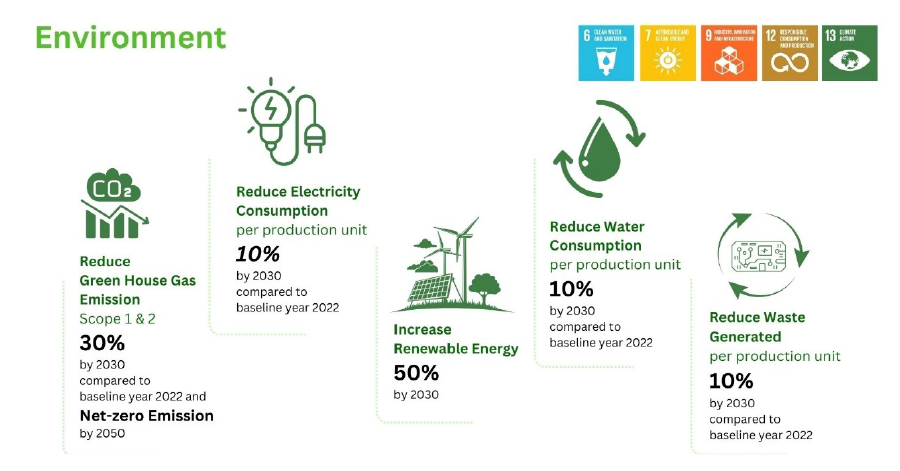
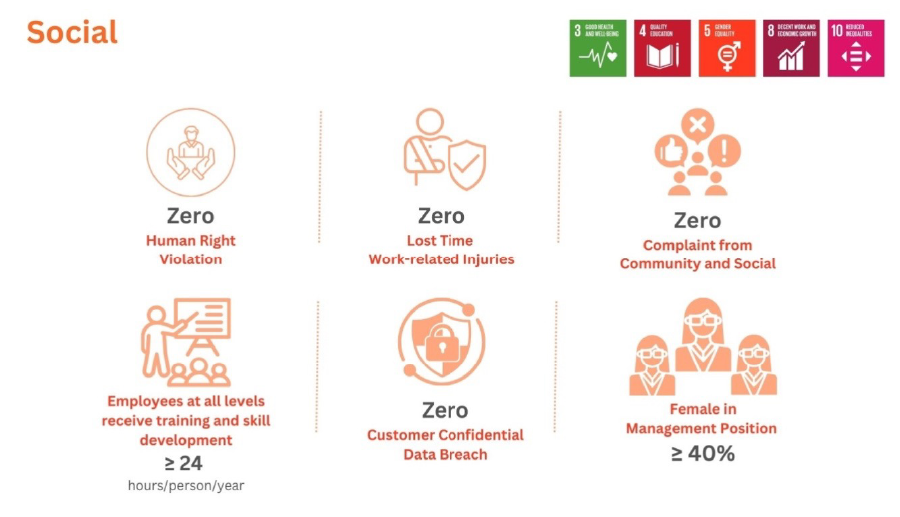
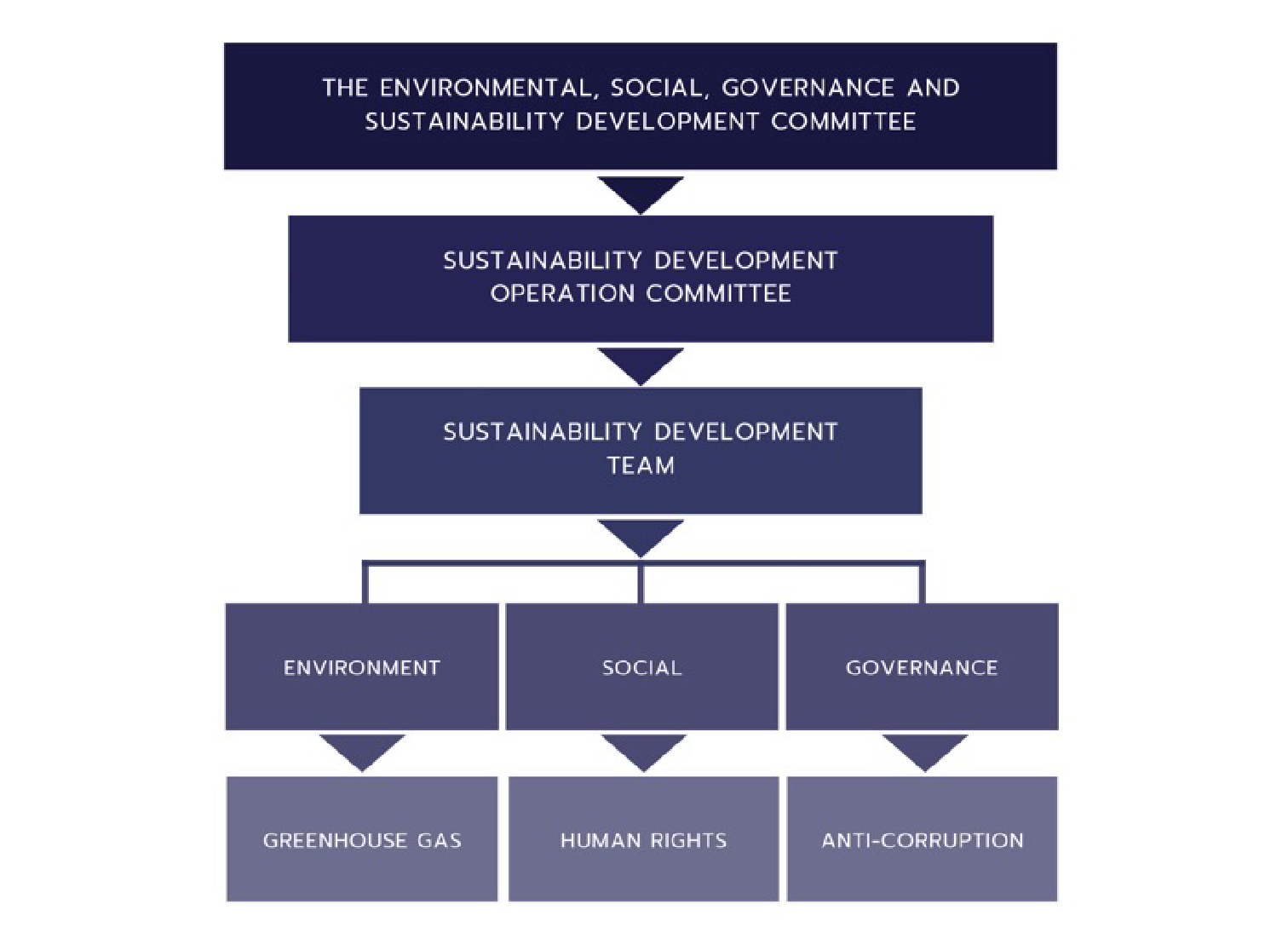
The Environmental, Social, Governance, and Sustainable Development Committee has established the Sustainable Development Operation Committee by appointing senior executives from all divisions of the company. This initiative ensures that operations align with the company's sustainable development policies and objectives. The committee's structure is illustrated in the following diagram.
List and Positions of the Sustainability Development Operation Committee.
| 1. Mrs. Suwadee Setthasuk | Sustainability Development Department | Chairperson of the Committee |
| 2. Mrs. Wasara Chotithammarat | Accounting & Finance Department | Committee Member |
| 3. Mr. Viboon Sunthornwiwath | Human Resource Department | Committee Member |
| 4. Mr. Poollarp Jittrasawad | Information Technology Department | Committee Member |
| 5. Mr. Haeman Sutham | Maintenance Department | Committee Member |
| 6. Mr. Manut Sirbuatong | Manufacturing Operation Department | Committee Member |
| 7. Mr. Jaturaporn Kongsatjawiwat | Engineering Department | Committee Member |
| 8. Mr. Pas Jirasawad | Production Control Department | Committee Member |
Mrs. Rattanaporn Guy-Williams is the Secretary of the Sustainability Development Operation Committee.
Scope, Authority, and Responsibilities of the Sustainability Development Operation Committee.
- Review policy, operational guidelines, and sustainability development goals.
- Participatory hearing from all stakeholders.
- Establish sustainability development materiality to appropriately engage with stakeholders.
- Promote and support sustainability development operations to achieve the goals.
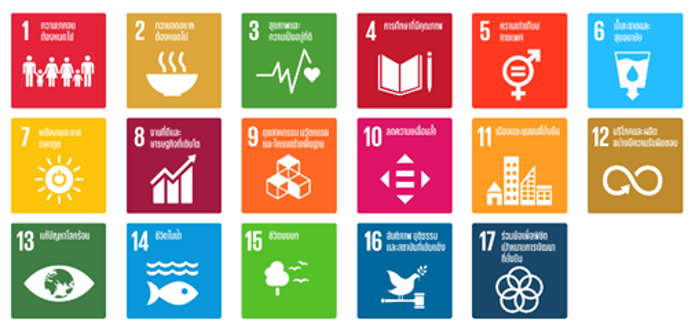
The Company has published its 2024 Sustainability Report, outlining its sustainability policy, operational goals, and management approach for addressing material sustainability topics during the reporting period from January 1, 2024, to December 31, 2024. This report covers the environmental, social, and corporate governance (ESG) performance of KCE Electronics Public Company Limited and its four manufacturing subsidiaries:KCE Technology Co., Ltd. (KCET), Thai Laminate Manufacturer Co., Ltd. (TLM), Chemtronics Technology (Thailand) Co., Ltd. (CTCC) and Chemtronics Products Co., Ltd. (CTP). The report considers the interests of all stakeholder groups and adheres to international disclosure standards, including the Global Reporting Initiative (GRI) Standard 2021 and the United Nations Sustainable Development Goals (UNSDGs), which consist of 17 global sustainability goals as outlined below.
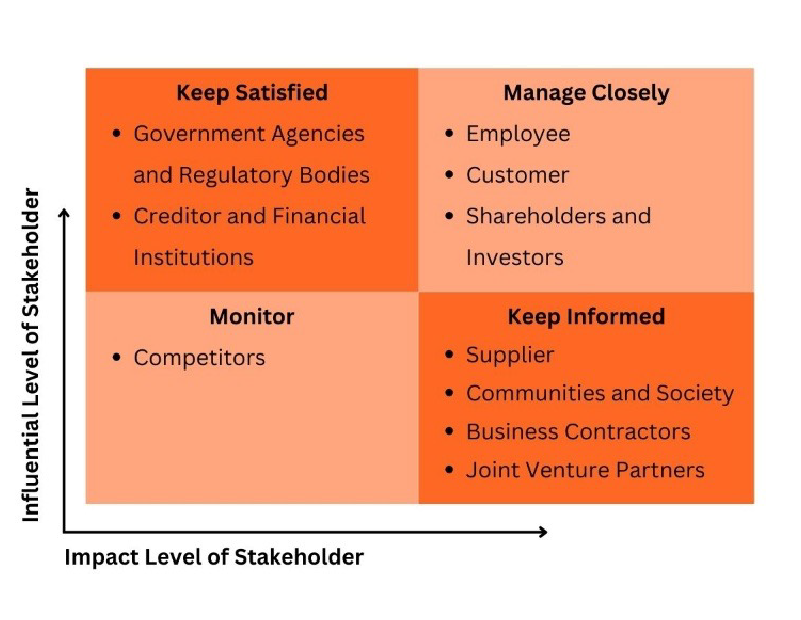
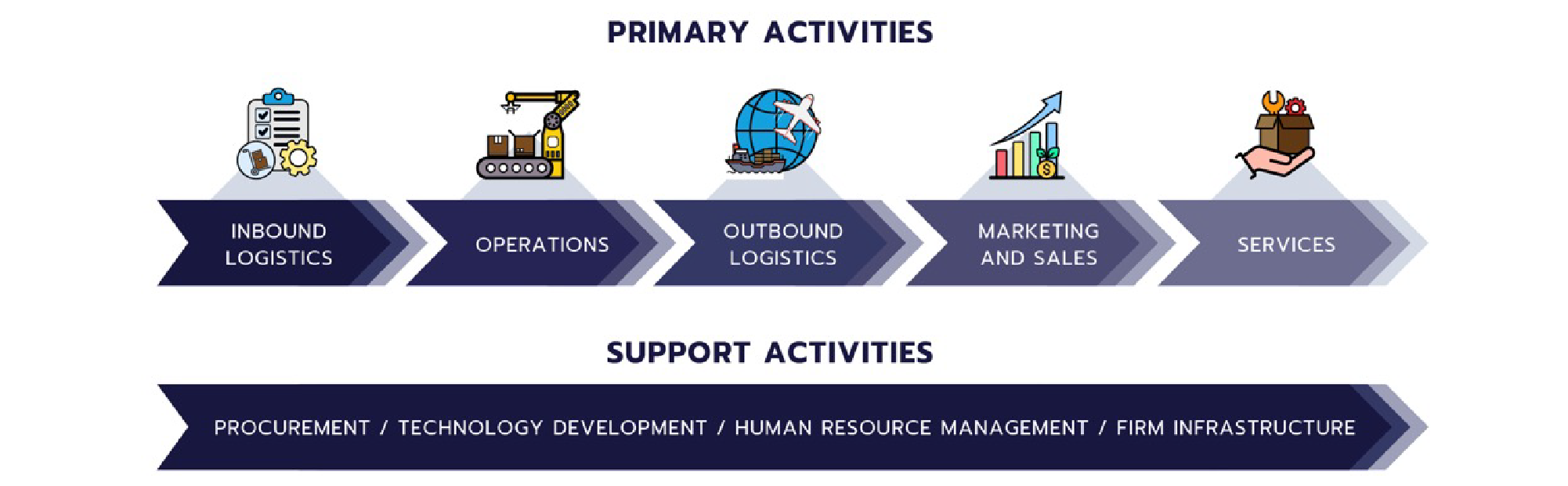
In today's business landscape, operations are interconnected across the value chain, encompassing stakeholders such as raw material suppliers, business partners, employees, customers, as well as society and the environment. Each stakeholder group plays a distinct role and has varying degrees of impact on the business. Managing stakeholder impacts within the value chain is therefore a crucial factor in fostering sustainable business growth, strengthening relationships with all relevant parties, building trust, and mitigating potential risks arising from business operations—whether they relate to environmental, social, or governance (ESG) aspects.
Business Value Chain of the Group
Stakeholders Engagement
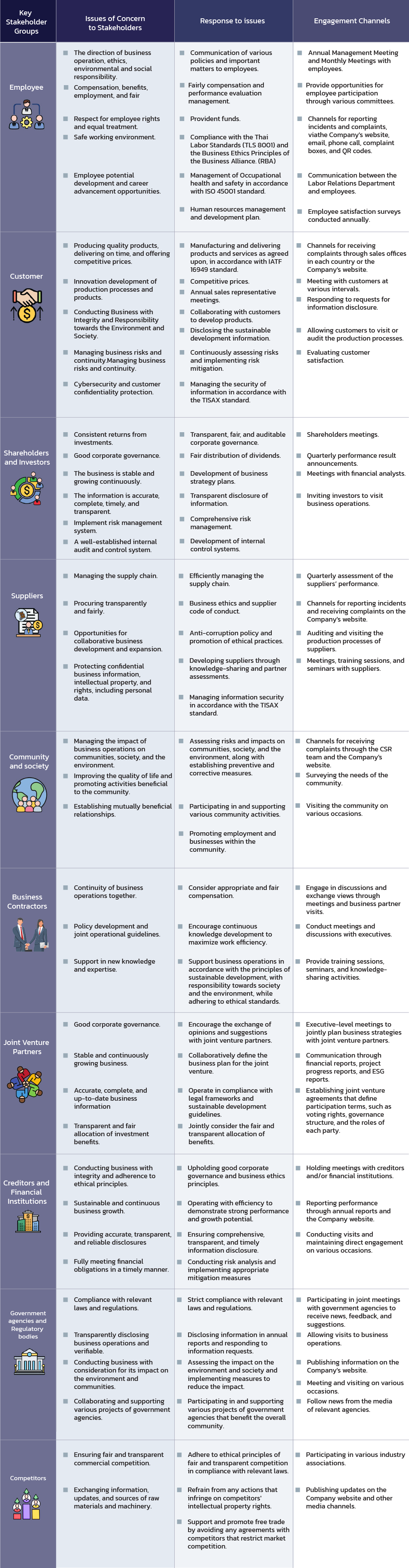
The Company is committed to conducting business with respect for human rights and treating stakeholders fairly. It actively listens to stakeholder feedback, fosters mutual understanding, and promotes constructive collaboration on matters of stakeholder interest. Additionally, the Company engages in social and environmental development to ensure sustainable business operations. The Stakeholder Engagement Process is as following:
- Identifying Stakeholders – Defining stakeholder groups, their roles, and expectations to prioritize engagement.
- Analyzing and Understanding Stakeholders – Assessing their needs, expectations, and key concerns.
- Strategic Engagement Planning – Establishing appropriate engagement methods for each stakeholder group, such as providing information through websites or annual reports and conducting consultations via surveys or focus group meetings.
- Implementing Engagement Initiatives – Executing planned engagement strategies and maintaining ongoing communication with stakeholders.
- Monitoring and Evaluation – Continuously improving engagement by assessing stakeholder satisfaction, tangible outcomes, and addressing any complaints or conflicts that arise.
Stakeholder Analysis in the Business Value Chain